Thème "PixCELLS"
Enzymes for Cell Factories & Plastics
A few words
Enzymes pour les usines cellulaires et les plastiques
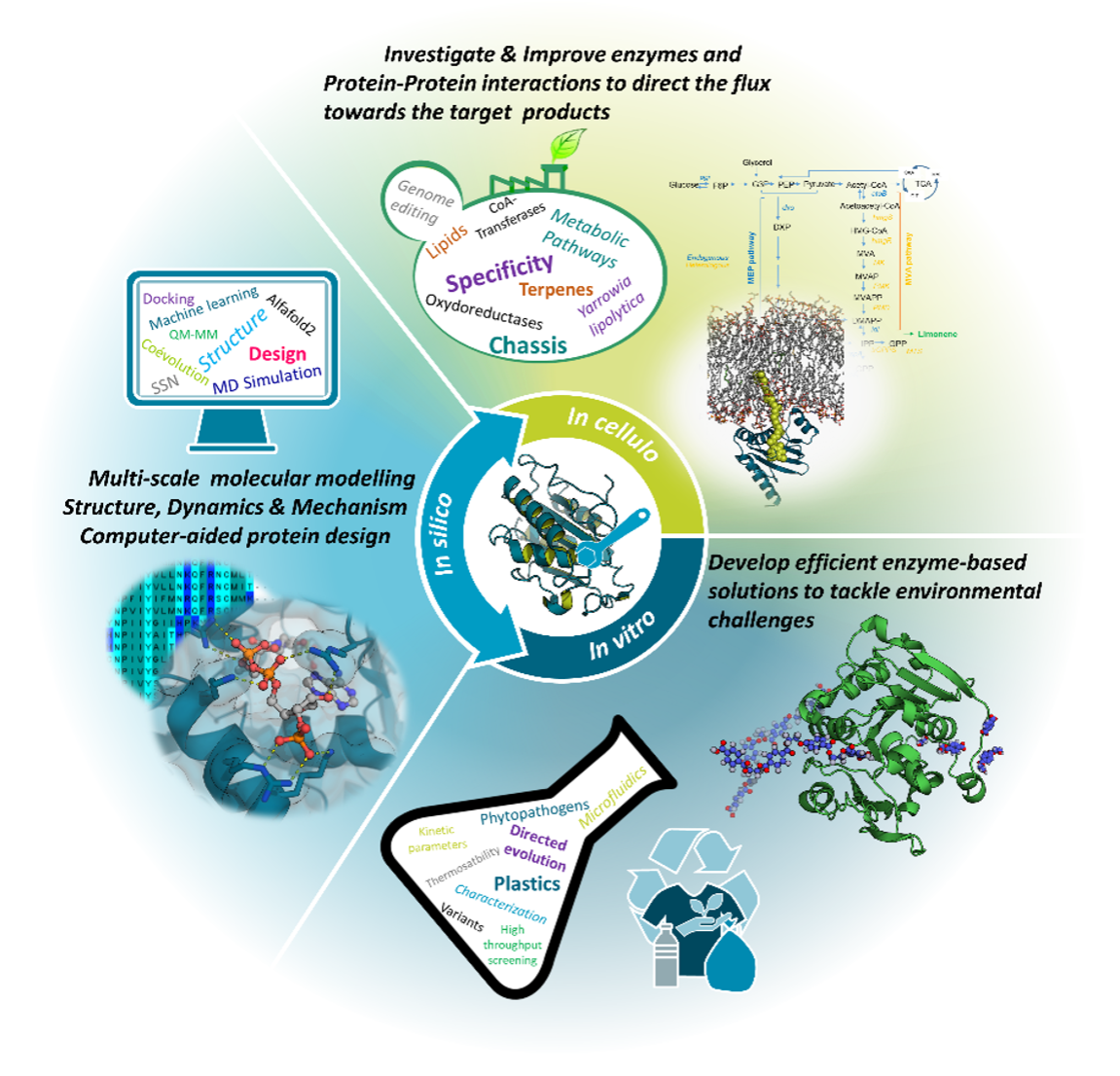
PixCELLS focuses its research on the in-depth investigation and development of efficient and tailored enzymes for in vitro and in vivo applications. Using multi-scale integrative and multidisciplinary approaches combining closely sequence-based and structure-based, molecular modelling and computational design approaches to enzyme and metabolic engineering, PixCELLS tackles various challenges in collaboration with public and private partners that aim at:
- Gaining fundamental knowledge on the relationships between sequence, structural organization, dynamics and enzyme properties (activity, specificity and stability) and interactions with partners (molecular assemblies, enzyme-polymer systems, enzyme-ligand, …)
- Providing guidelines for reasoned in silico computer-aided conception of tailored enzymes for different biotechnological applications
- Improving in cellulo production of value-added molecules by redirecting fluxes, enhancing enzymes performances and protein-protein interactions
- Developing efficient in vitro enzyme-based solutions for different applications, notably to address environmental challenges (plastics, phyto-pathogens, …) but not exclusively
Responsable du thème : Isabelle André
Ongoing projects
OPTI-ZYME Project
2022-2027
ADEME OPTI-ZYME, France 2030 (2023-2027) & Private contracts (2022-2023)
Enzymes’ power for the recycling and biosynthesis of plastic polymers
Depuis plus de 10 ans, nous sommes activement impliqués dans le développement d’enzymes pour la dégradation et la biosynthèse des plastiques, principalement avec notre partenaire de longue date Carbios. Ceci a conduit à la création d’un laboratoire collaboratif entre l’INSA et Carbios et hébergé à TBI, appelé PoPLaB (pour « Polymers, PLastics and Biotechnology »), regroupant près de 25 personnes de TBI et de Carbios.
BACTSQUEEZ Project
2022-2026
ANR PRCE
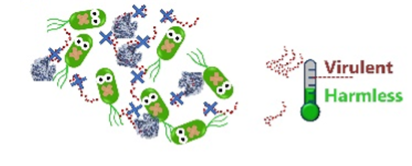
Bacterial signal quenching of plant pathogens with engineered enzymes
Dans le cadre du projet Bactsqueez financé par l’ANR, notre groupe collabore avec la société Gene&GreenTK et l’ I2BC pour étendre l’approche Quorum Quenching à la dégradation des molécules AHL impliqués dans le Quorum Sensing de phytopathogènes hautement problématiques
Read more: https://www.gene-greentk.com/company/bactsqueez-project
BIOIMPULSE
2019-2025
ADEME
Production bio-sourcée d’une molécule pour le développement d’adhésifs et de résines non toxiques
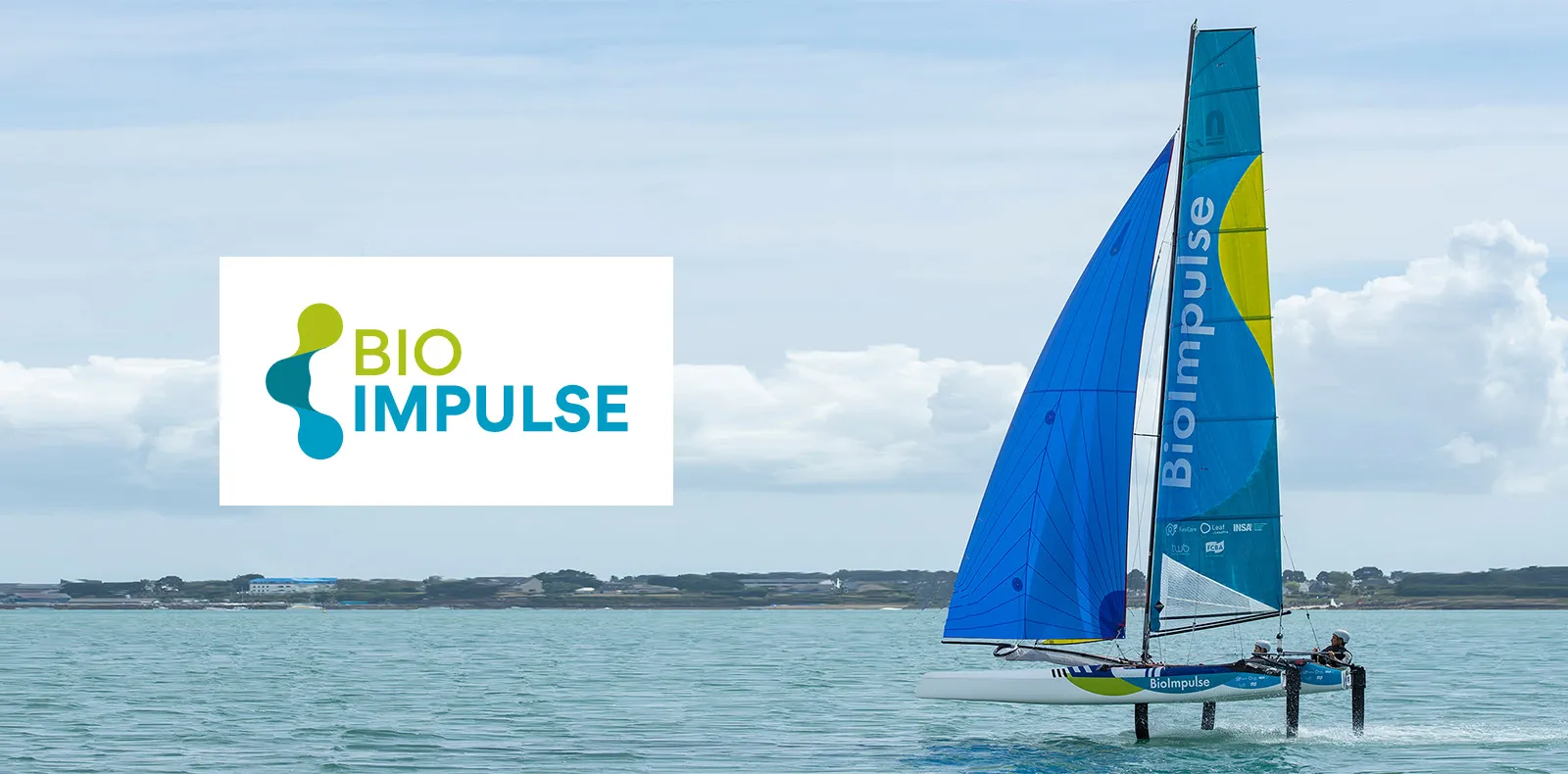
The BioImpulse project aims to create a new adhesive resin free of substances of very high concern such as formaldehydes. By developing a biobased molecule of interest, this project will open up new applications for biotechnology in the field of materials. The project supported by ADEME involves both academics and industrial partners: Resicare, Lesaffre, FCBA, INRAE, INSA Toulouse.
Read more: BioImpulse
LIPIDES
2023-2026
PhD Jérémy Le Reun (2022-2025), University of Barcelona (2022-2025)
Enzymatic and microbial engineering for the production of tailored lipids
We aim at developing efficient microbiological processes to produce original fatty acids, a class of compounds of great interest as synthons for industrial use. To develop such efficient microbial production systems, we work with the oleaginous model yeast Yarrowia lipolytica both at the enzymatic level (collaboration with ICREA-University of Barcelona) and at the metabolic level.
Deepen
2020-2024
ANR PRC (2020-2025) , Thèse de doctorat de Romain Launay (2020-2023)
Approches basées sur la séquence et la structure pour la compréhension des assemblages supramoléculaires de protéines : Cas de la voie de biosynthèse de l’ubiquinone
Within the frame of the ANR-funded project Deepen, our group collaborates with TIMC-University of Grenoble and DSIMB from University of Paris to investigate and better understand supramolecular protein assemblies using multi-scale modelling and integrative approaches.
ECOCTS
2020-2024

INTRACREATE ECOCTS – NRF, CNRS@CREATE (France/Singapore)
Engineering biology for a circular bioeconomy – Towards urban sustainability
The EcoCTs project between France and Singapore, hosted by CNRS@CREATE, aims at producing new leading-edge scientific knowledge in the field of systems and engineering biology applied to a circular bioeconomy and to address generic knowledge-based bottlenecks to overcome main limitations in using biocatalysts for industrial production. It is a multi-teams program that involves researchers from TBI (CNRS, France), SynCTI (NUS, Singapore) and SIFBI (A*-star, Singapore) and coordinated by our group and SynCTi.
En savoir plus : https://www.cnrsatcreate.cnrs.fr/ecocts/